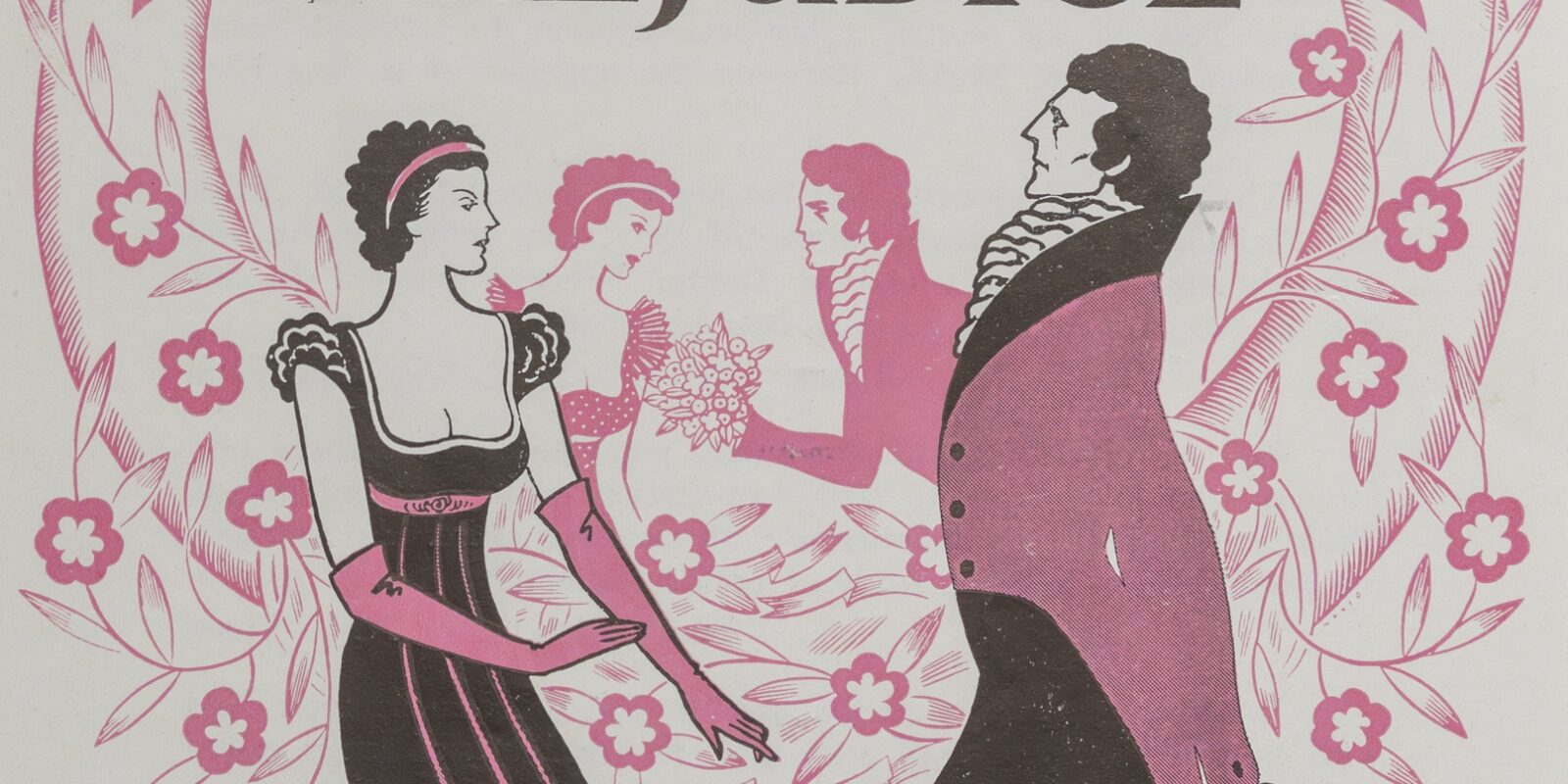
Part 3: Pride and Prejudice in the West End, 1936
Could Helen Jerome’s Pride and Prejudice play, a hit in America, repeat its success in England? Many were sceptical when it was announced, a month after the play’s Broadway debut, that it was heading to London’s West End. An English theatre critic admitted his first response to this news was fear.
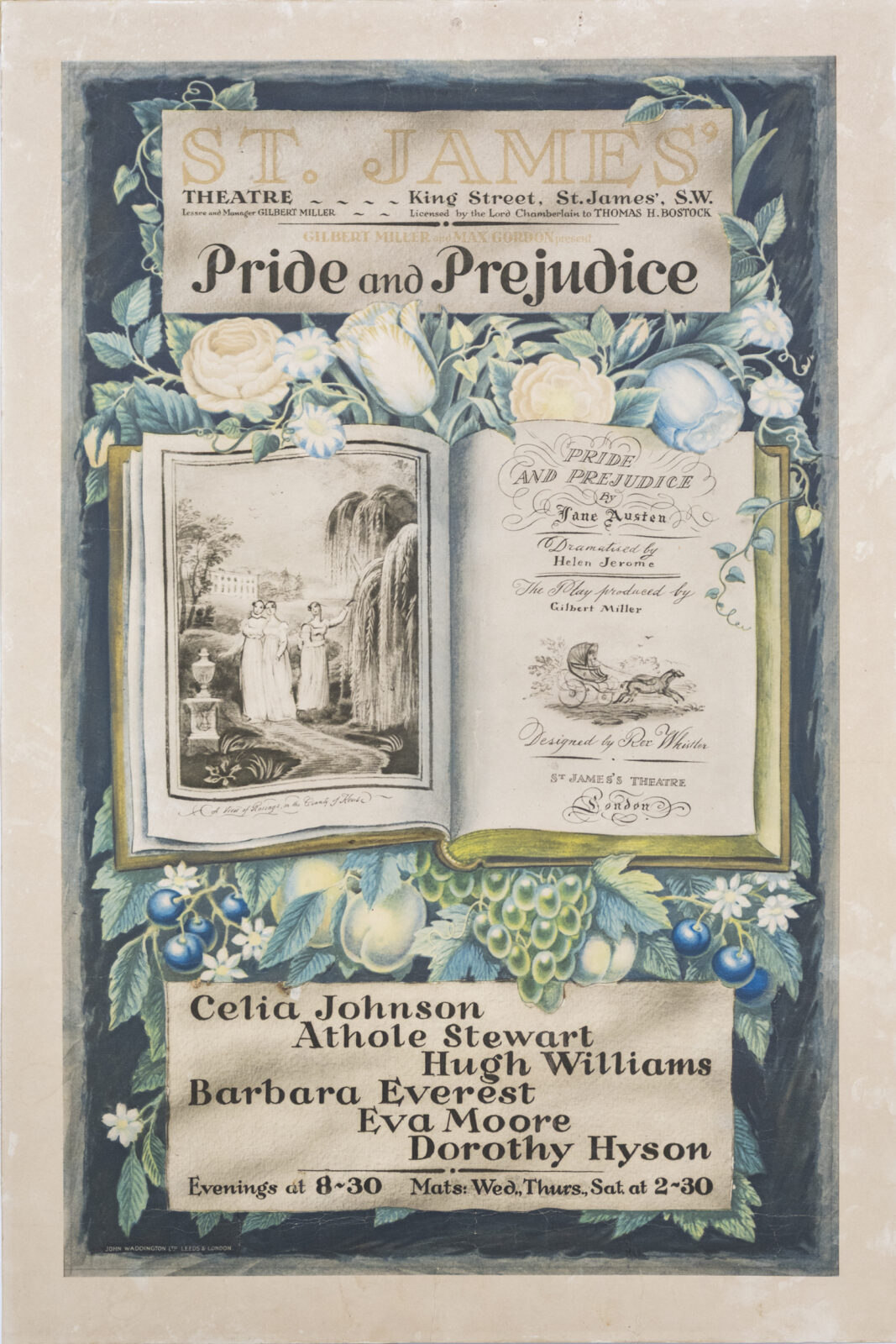
Stage poster for Pride and Prejudice. Design by Rex Whistler, 1936.
The elaborately decorative poster for Pride and Prejudice is a riot of fruit and flowers, effortless conjuring thoughts of romance, youth, and the heady bucolic beauty of a bygone age.
In ‘The Masque, Designs for the Theatre by Rex Whistler’ (1947), Cecil Beaton wrote of Rex Whistler’s ‘magic talent’ and described his ‘acute appreciation of the atmosphere created by the things he loved to draw, from the crisp muslins, straw baskets, or the gardening shears, and the full-blown, full-hearted roses revelling in their sensuous deep maturity.’ Those very roses seem to flourish on this poster – a distillation of the bloom and grace that suffused the whole production.
Production values
‘one of the most exquisitely lovely things to be seen in the theatre to-day.’ – Play Pictorial, Vol.LXVIII, No.48
It seems no expense was spared. For its Pride and Prejudice, the St. James’s Theatre would use a revolving stage for the first time in its history. The English designer Rex Whistler (1905-1944) was hired for both sets and costumes. His classical-style pillars for the drawing room scene at Rosings were allegedly made of actual concrete.
Co-producer and director Gilbert Miller, an American, promised to rid Jerome’s script of all Americanisms. He worried publicly that people would accuse him of desecrating an English classic. Jerome assured the media there would be a world of difference between the American and English productions. “The dresses and staging,” she told one reporter, “are even more beautiful than in New York.”
When the play opened on 27 February 1936, it proved doubters wrong. One reviewer was completely won over in ten minutes. Another called the play “potted Austen” yet went on to praise it. Audiences cheered. Its London run extended to 317 performances.
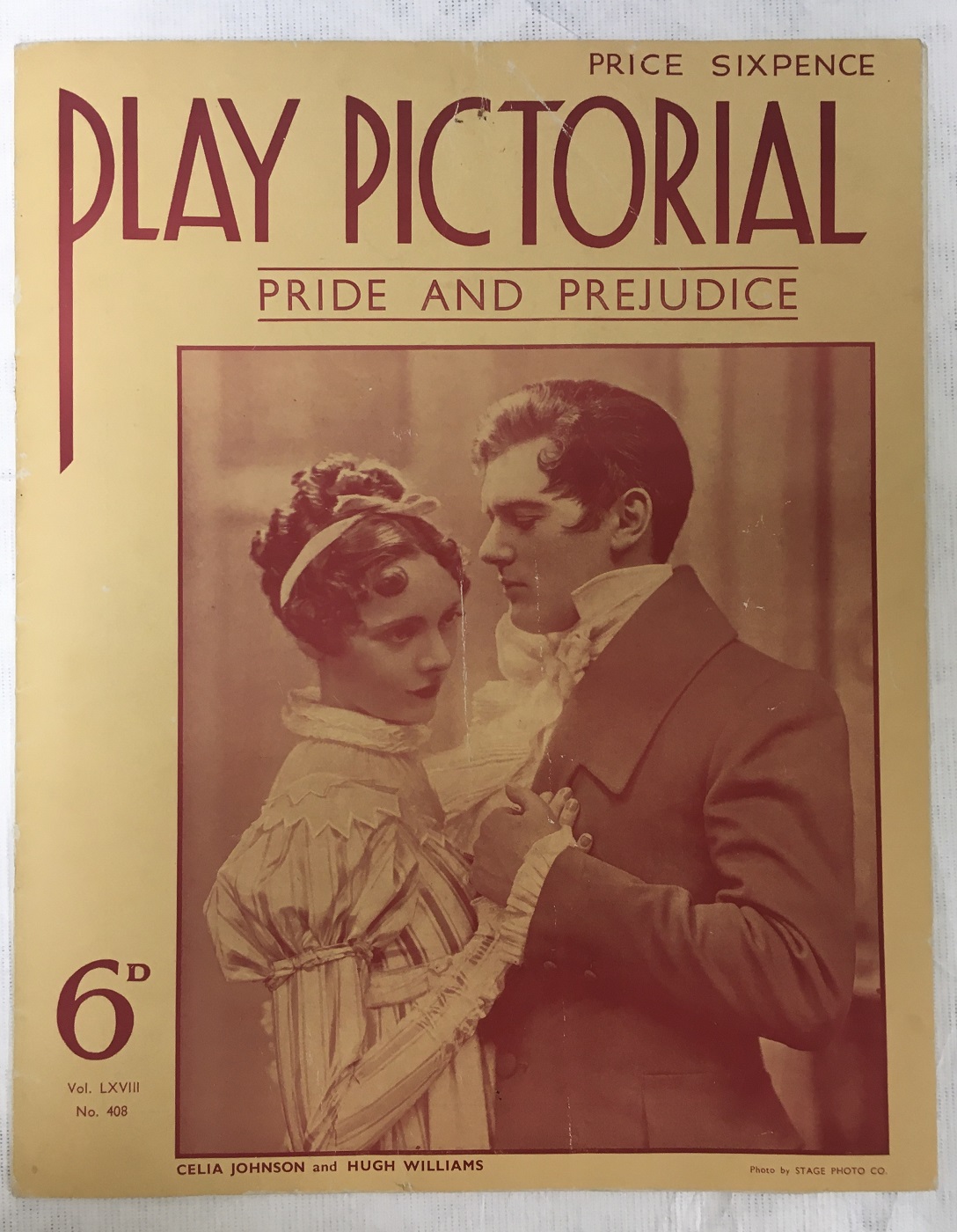
‘Play Pictorial’, Vol LXVIII. No. 408. 1936.
This issue focused solely on Pride and Prejudice at St. James’s Theatre.
The cast
‘This happy recapture of the graceful days of Regency is maintained by a cast which never betrays nineteenth-century decorum by twentieth-century brusqueness and movement.’ – Play Pictorial, Vol.LXVIII, No.48
Its principal characters gave more restrained performances than in New York. Hugh Williams’s Darcy was described as enigmatically aloof but full of decorum. One press photo, however, shows him holding Elizabeth’s hand very close to the front of his tight white breeches, with just a thin wooden chair separating the two.
Celia Johnson as Elizabeth got rave reviews, thanks to her admirable control and wide-eyed innocence, a description apparently both figurative and literal. Caricaturists drew Johnson’s Elizabeth with bulging eyes.
Stage design
‘the idealised Regency in Mr Rex Whistler’s wittily designed scenes and satisfying costumes’ – The Tatler, 18 March 1936
The press gave its loudest praise to Whistler’s designs. The Observer called them the most brilliant stage sets its reviewer had ever seen. The play’s colourful drop curtain depicted a gorgeous title page of the novel using the designer’s signature embellishments. Whistler was killed in action in World War II, tragically cutting short his artistic career.
Some of Whistler’s original costumes from the 1936 play were re-used in the 1967 BBC serial Pride and Prejudice, which also featured in its cast Celia Johnson’s daughter, Lucy Fleming, as Lydia Bennet.
Production designs by Rex Whistler for Pride and Prejudice
Click below to enter the gallery and scroll through Rex Whistler’s set and costume designs for the production.
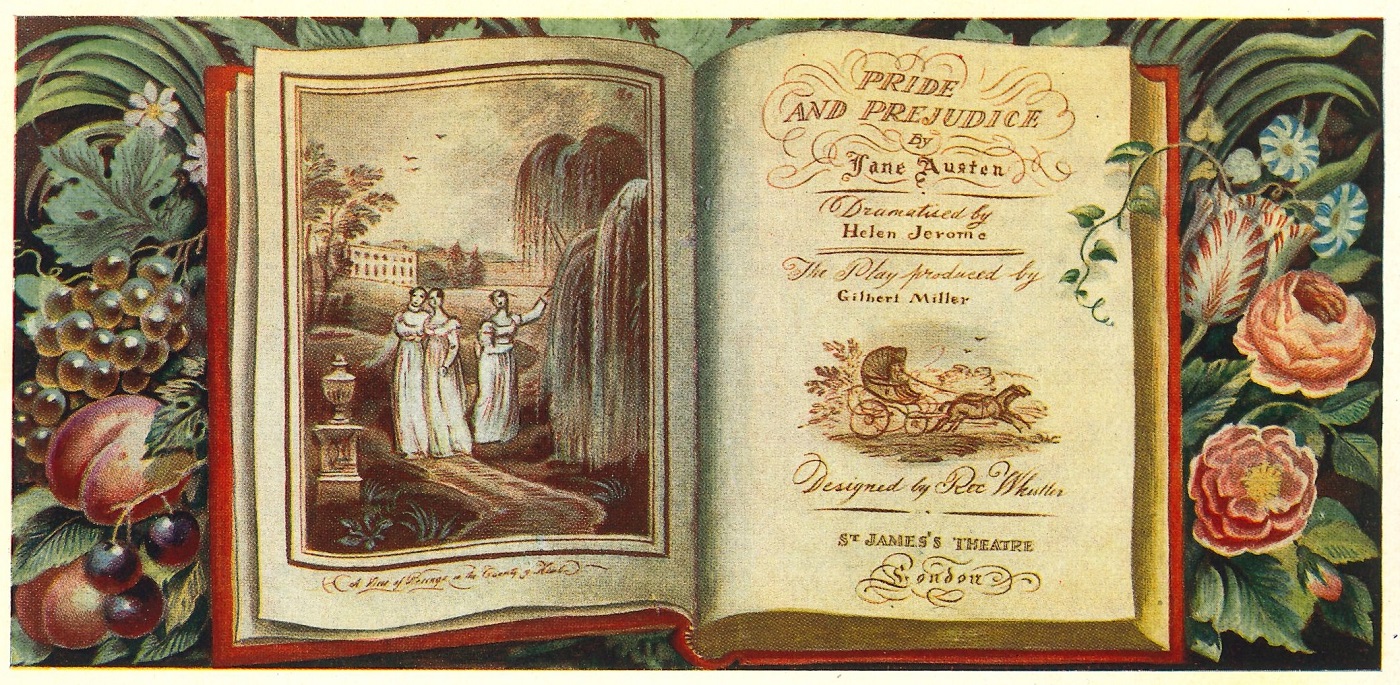
Design for Act-Drop, by Rex Whistler, 1936.
The Act-Drop was a decorative cloth dropped in front of the stage between acts, whilst the scenery was changed. On this one, Rex Whistler utilised elements of the elaborately decorative poster to create a stunning design, in keeping with the bucolic beauty of the whole production.
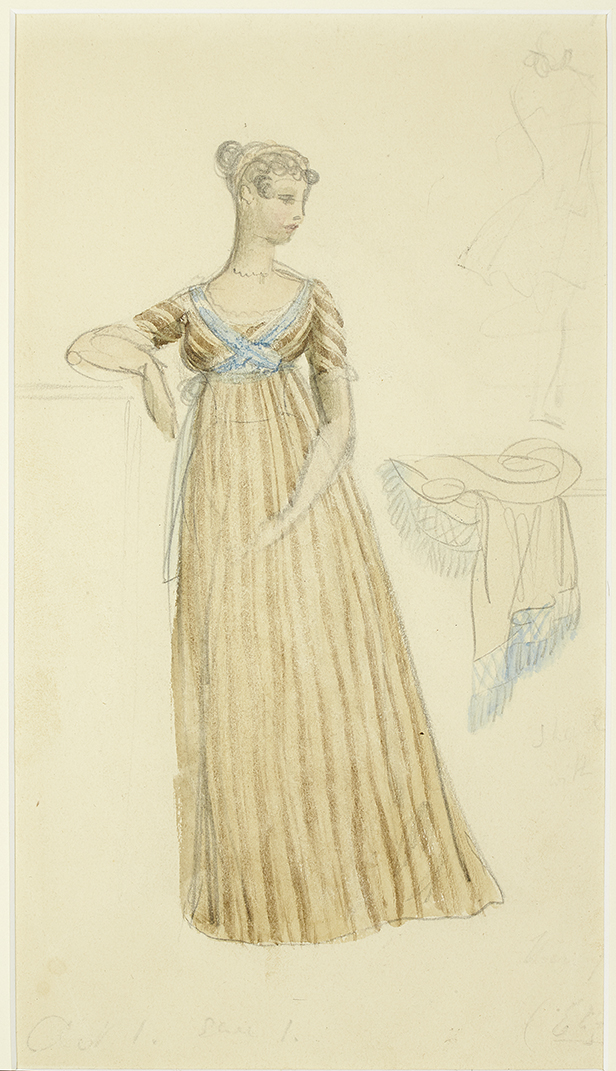
Costume design for Elizabeth Bennet by Rex Whistler, 1936.
Pencil, watercolour, pen and ink.
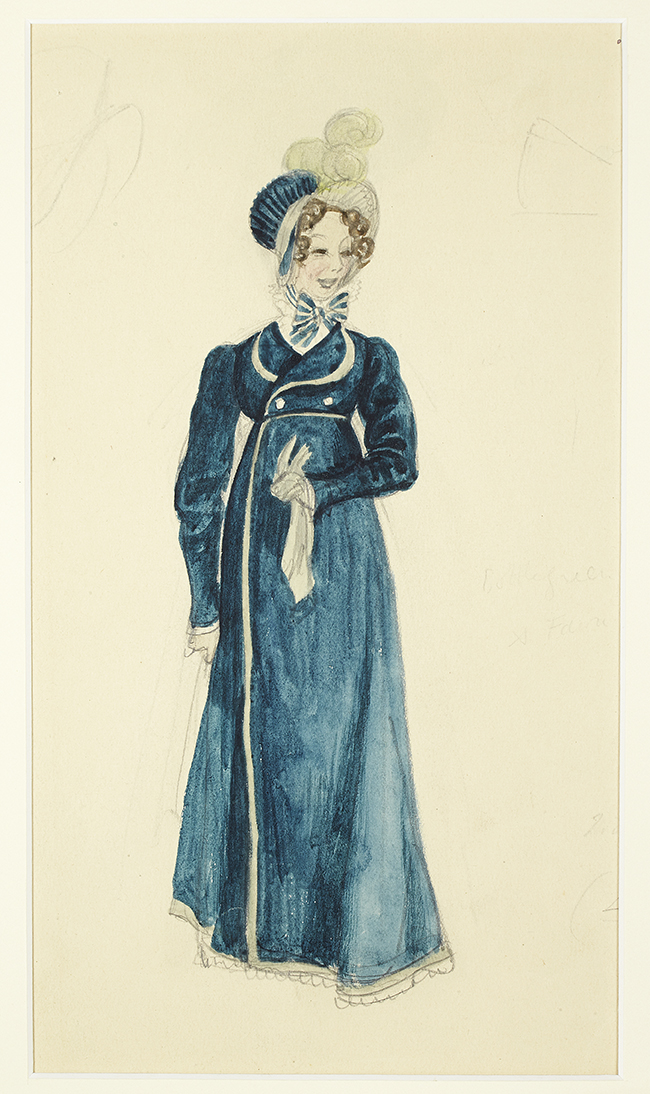
Costume design for Lydia Bennet by Rex Whistler, 1936.
Pencil, watercolour, pen and ink.
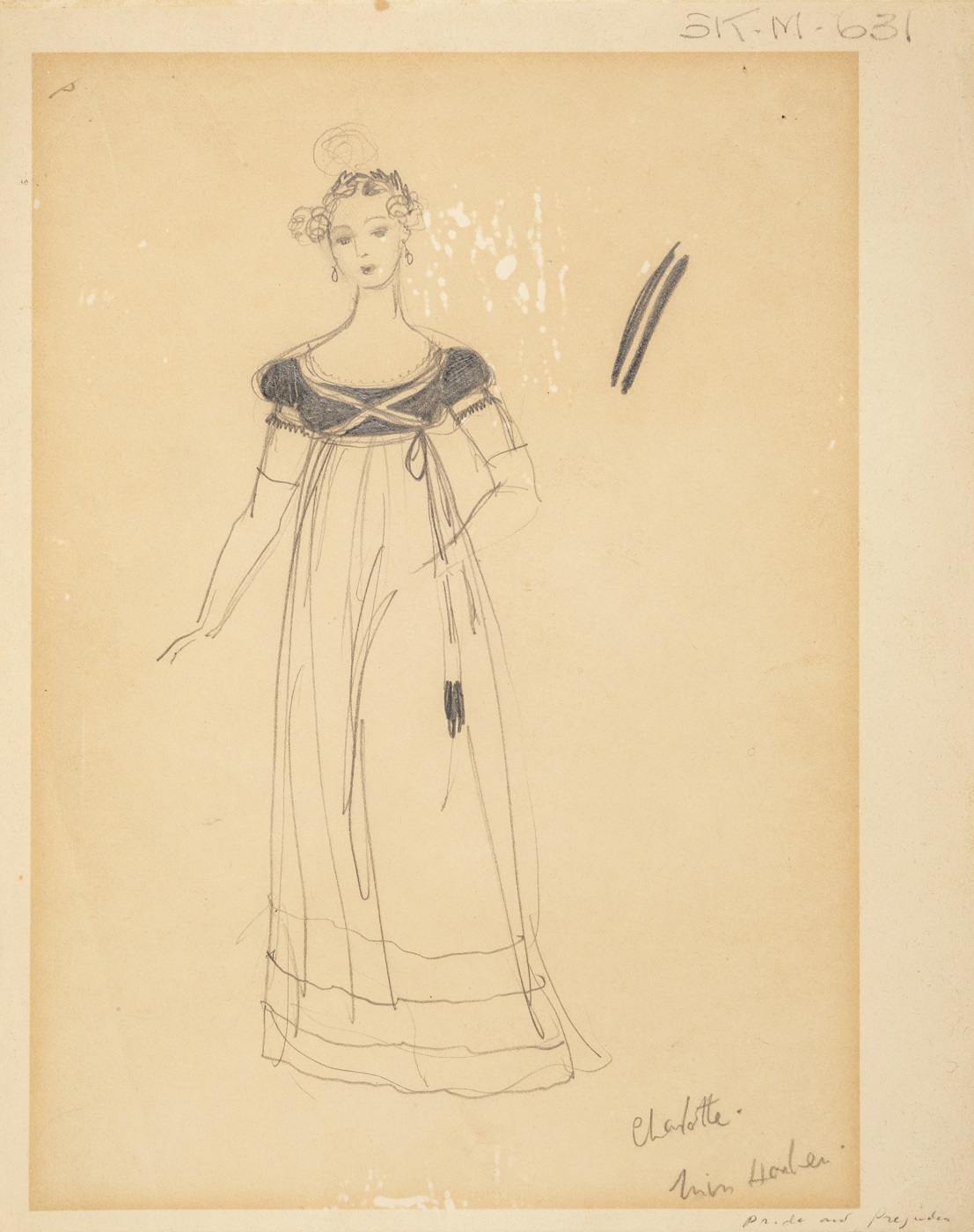
Costume design for Charlotte Lucas by Rex Whistler, 1936.
On loan from The Holburne Museum, Bath. Photo by Jo Hounsome Photography.
Pencil, watercolour, pen and ink.
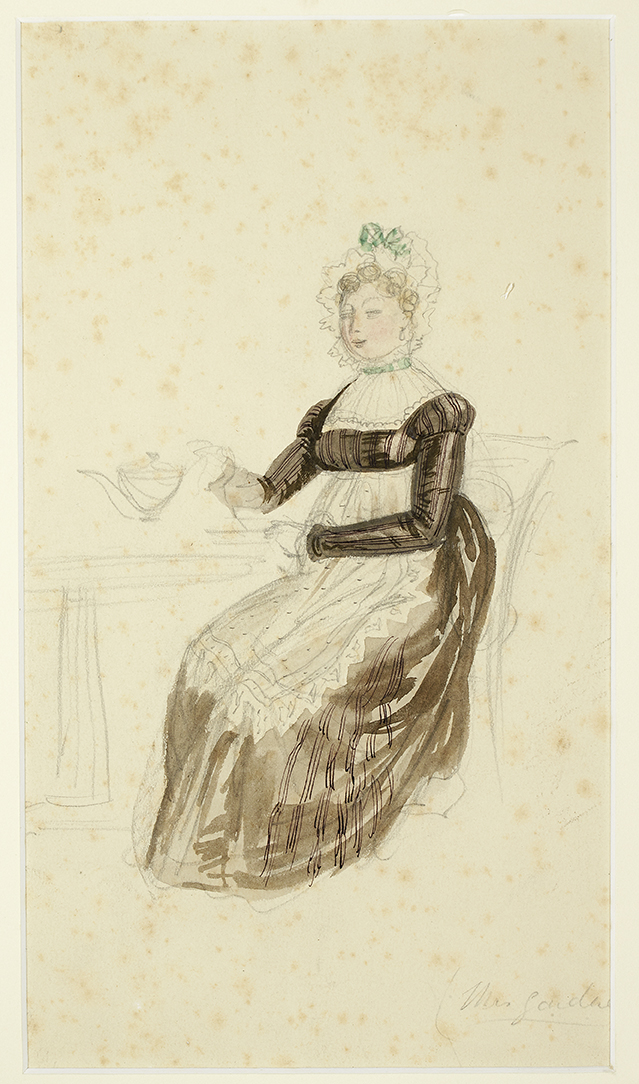
Costume design for Mrs Gardiner by Rex Whistler, 1936.
Pencil, watercolour, pen and ink.
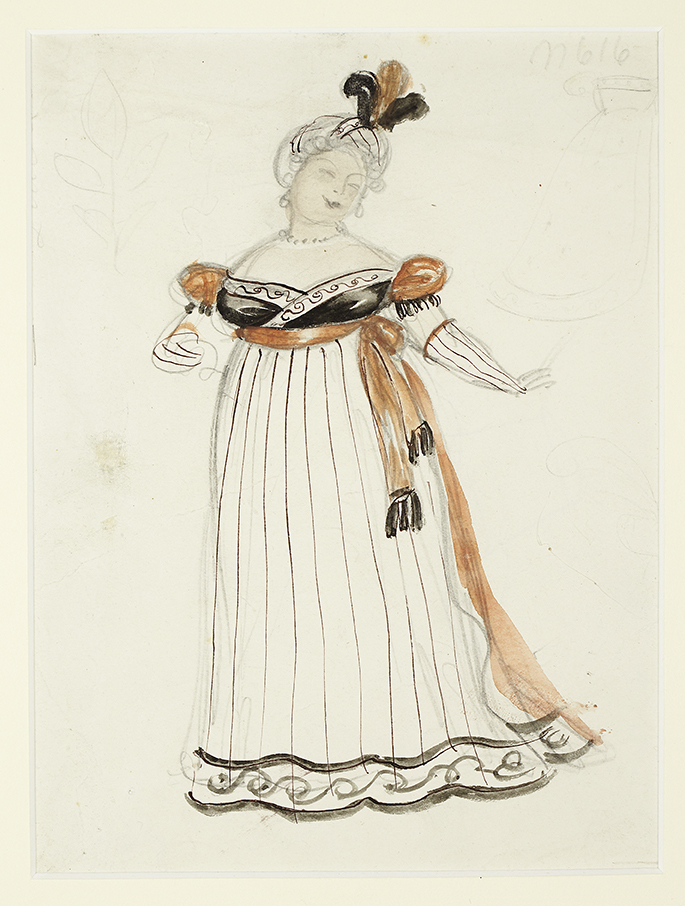
Costume design for Mrs Bennet by Rex Whistler, 1936.
Pencil, watercolour, pen and ink.
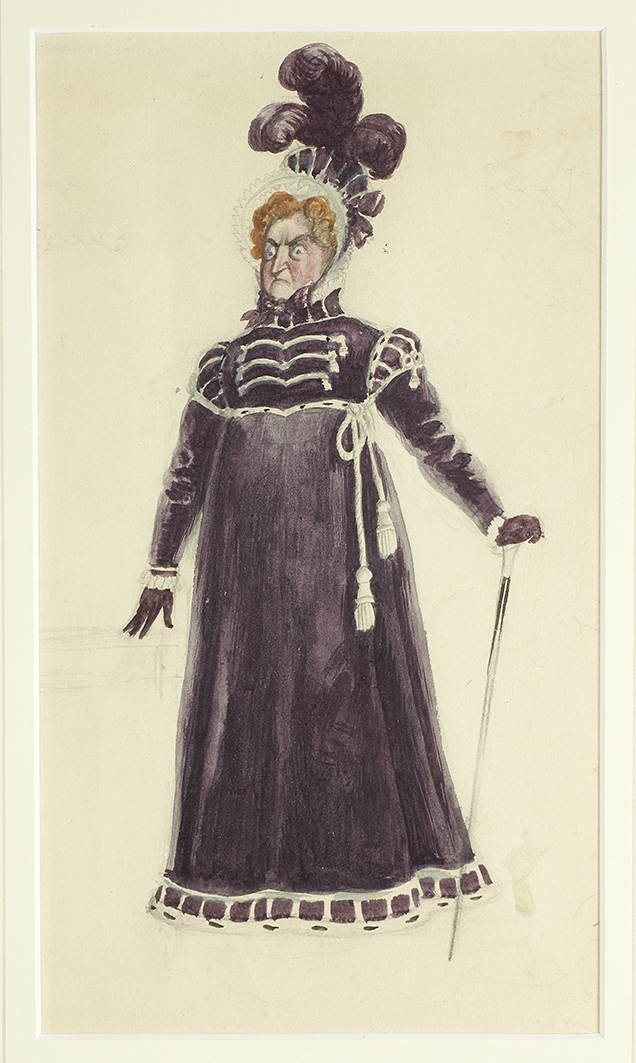
Costume design for Lady Catherine de Bourgh by Rex Whistler, 1936.
Pencil, watercolour, pen and ink.
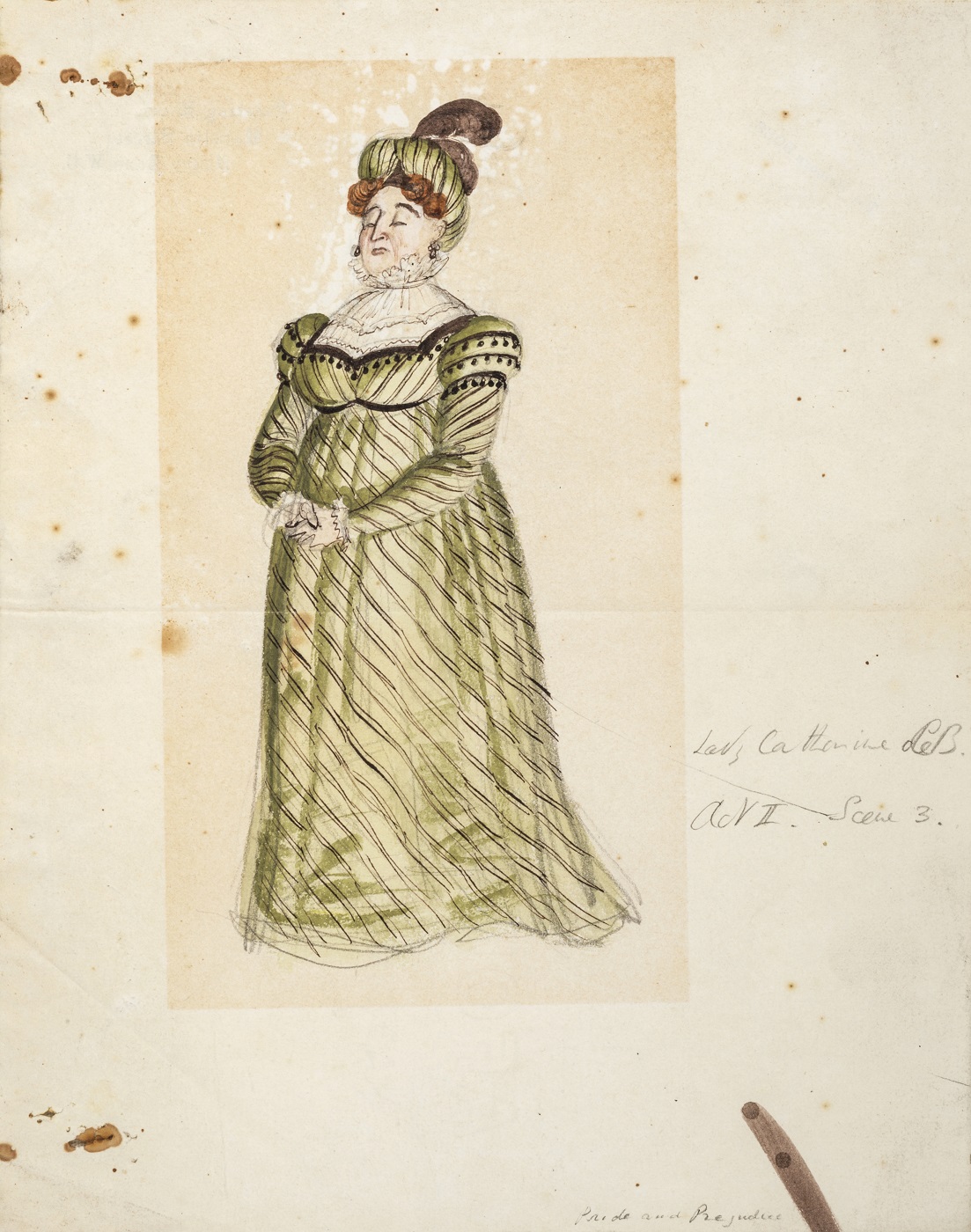
Costume design for Lady Catherine de Bourgh by Rex Whistler, 1936.
On loan from The Holburne Museum, Bath. Photo by Jo Hounsome Photography.
Pencil, watercolour, pen and ink.
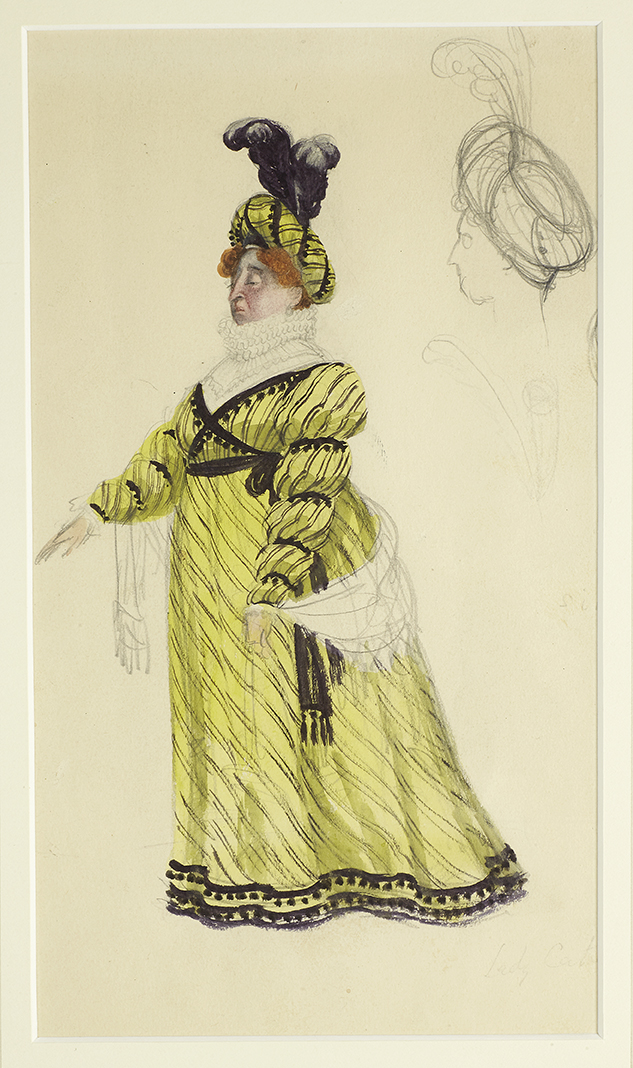
A revised version of a costume design for Lady Catherine de Bourgh by Rex Whistler, 1936.
Pencil, watercolour, pen and ink.
In this design, the neckline and sleeves have been changed. This is the final design that was produced – as you can see on the next image.
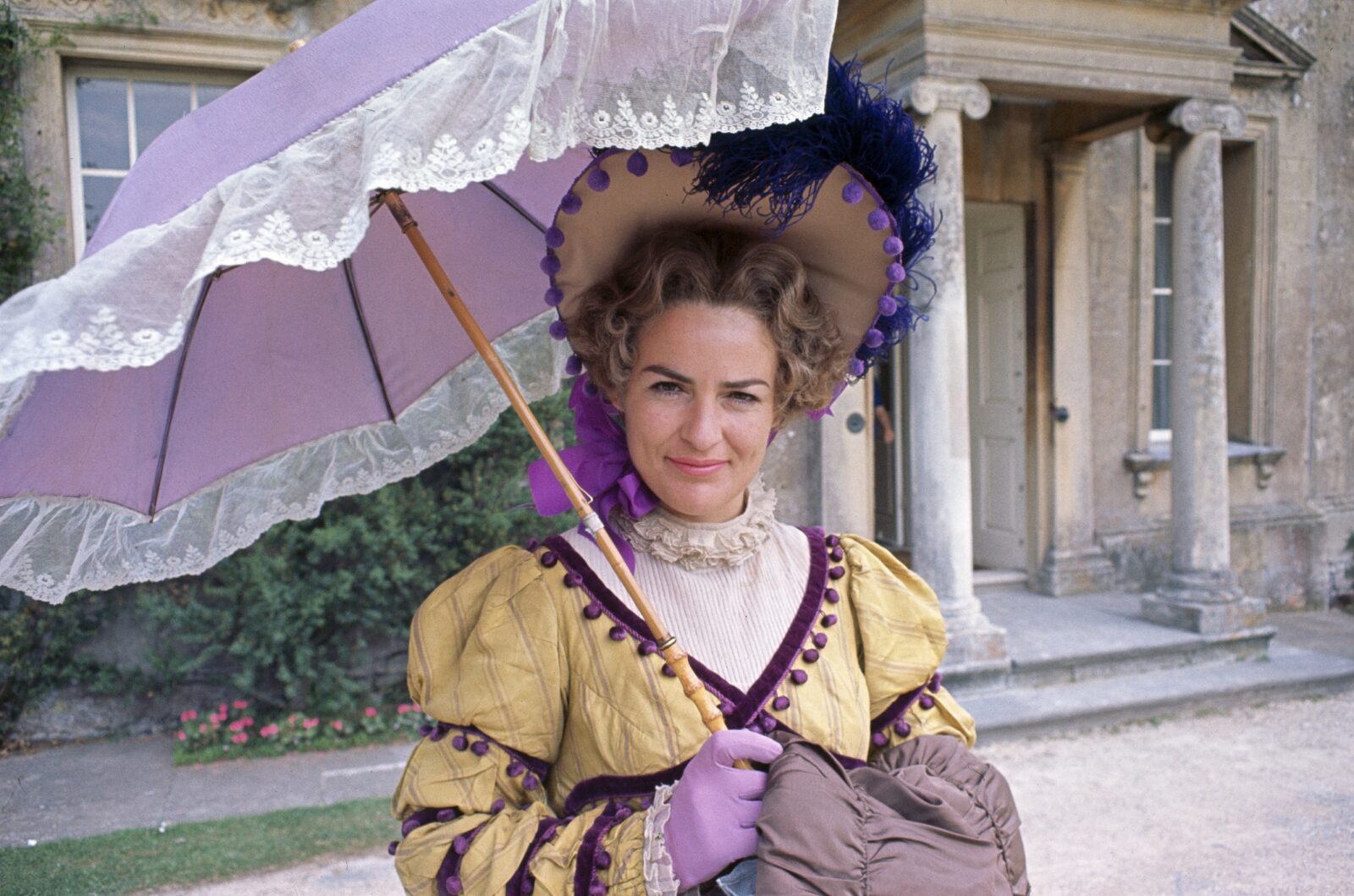
Lady Catherine de Bourgh’s yellow dress (worn by Vivian Pickles as Mrs Bennet in the BBC’s 1967 adaptation of Pride and Prejudice).
Image reproduced courtesy of the BBC. ©BBC 1967
Many of the costumes designed by Rex Whistler for the 1936 stage adaptation were re-used 30 years later in a TV adaptation of Pride and Prejudice by the BBC.
The distinctive yellow and purple dress Whistler created for Lady Catherine de Bourgh can be seen here on Vivian Pickles as Mrs Bennet – showing just how vibrant the stage costumes had been.
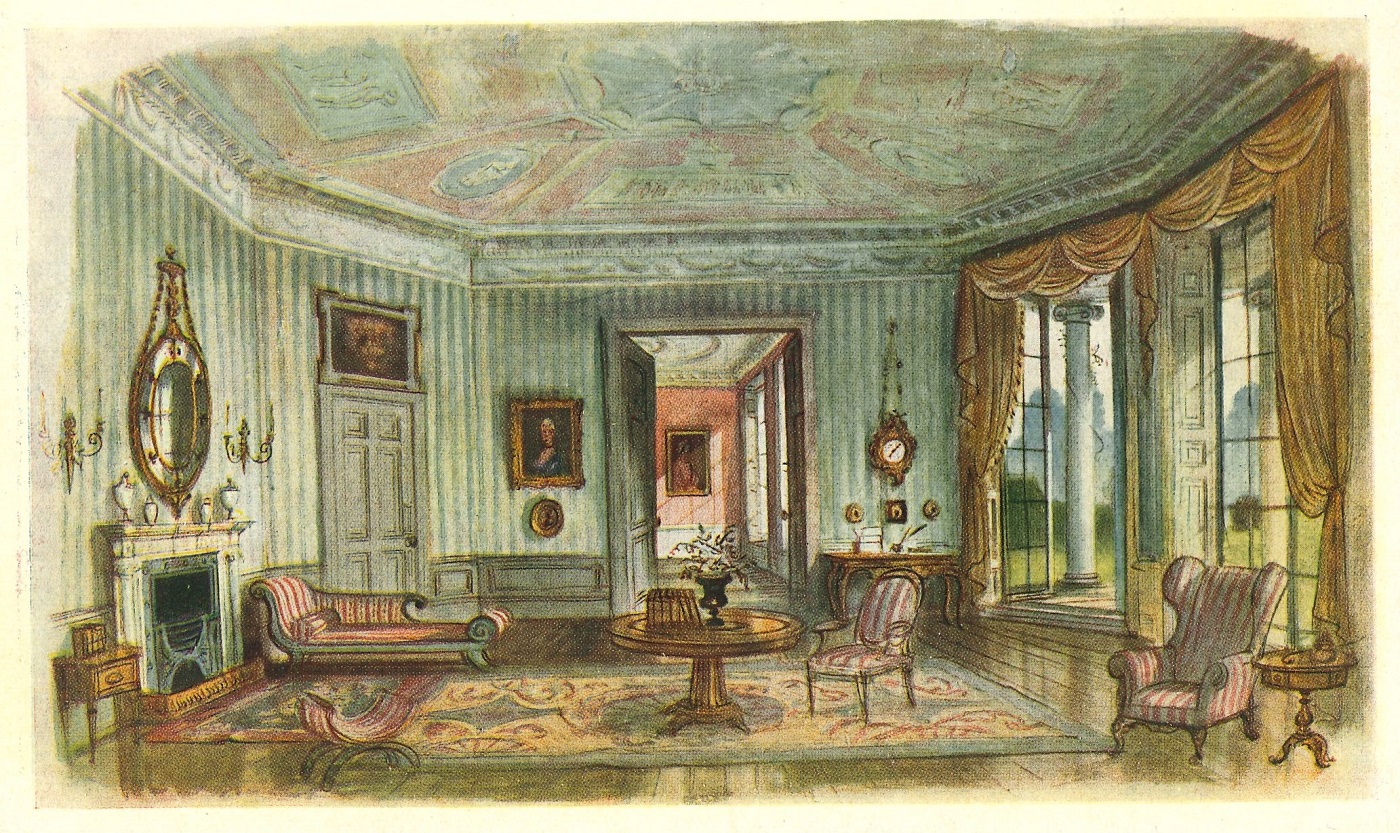
Set design for Pride and Prejudice, Act I, Act II Scene 1, Act III: Longbourn. By Rex Whistler, 1936.
This is the design for the Drawing Room at Longbourn, where much of the action of the play takes place. The walls are hung with striped paper and the room is decorated with elegant Regency furniture. In Jerome’s play the Netherfield Ball becomes the Longbourn ball, and whilst the dancing takes place off-stage this room is the setting for Darcy and Elizabeth’s mutual antagonism.
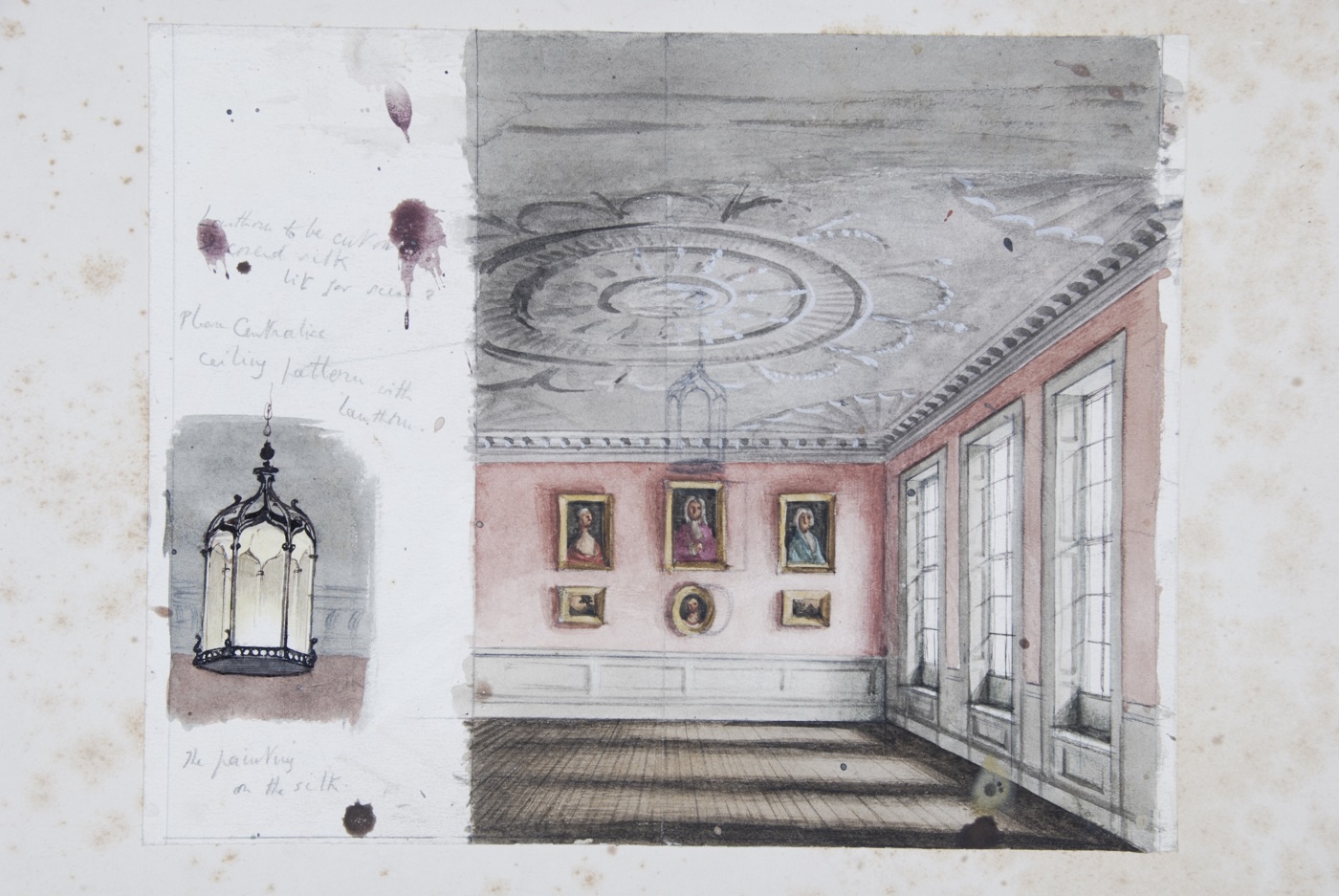
Set design for Pride and Prejudice, Act I, Act II Scene 1, Act III: Longbourn. By Rex Whistler, 1936.
Reproduced by kind permission of the Salisbury Museum.
This design is for a second room, which is just glimpsed through the double doors of the Drawing Room. This is presumably the ballroom. Although it is only just seen, it has been meticulously designed with an ornamented plaster ceiling, a wall hung with portraits, and three long windows.
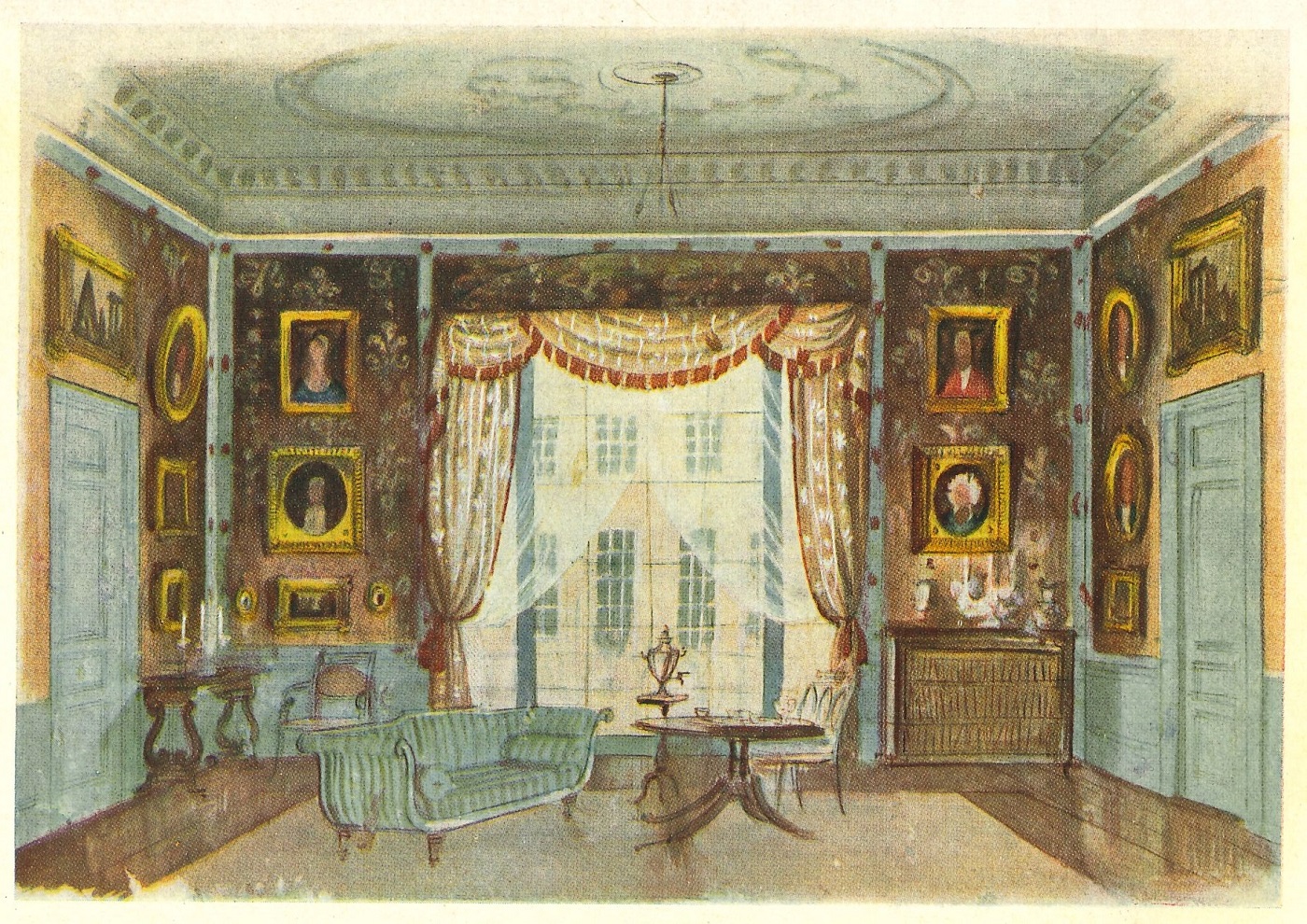
Design for Act II Scene 2, Pride and Prejudice. The Gardiners’ House in London. By Rex Whistler.
This design is for the Drawing Room of the Gardiners’ house in Cheapside. Whilst Jerome cut many scenes from the novel, such as those at Pemberley, she created a new scene set at the Gardiners’ house, at which Jane and Miss Bingley meet whilst Jane is staying in London.
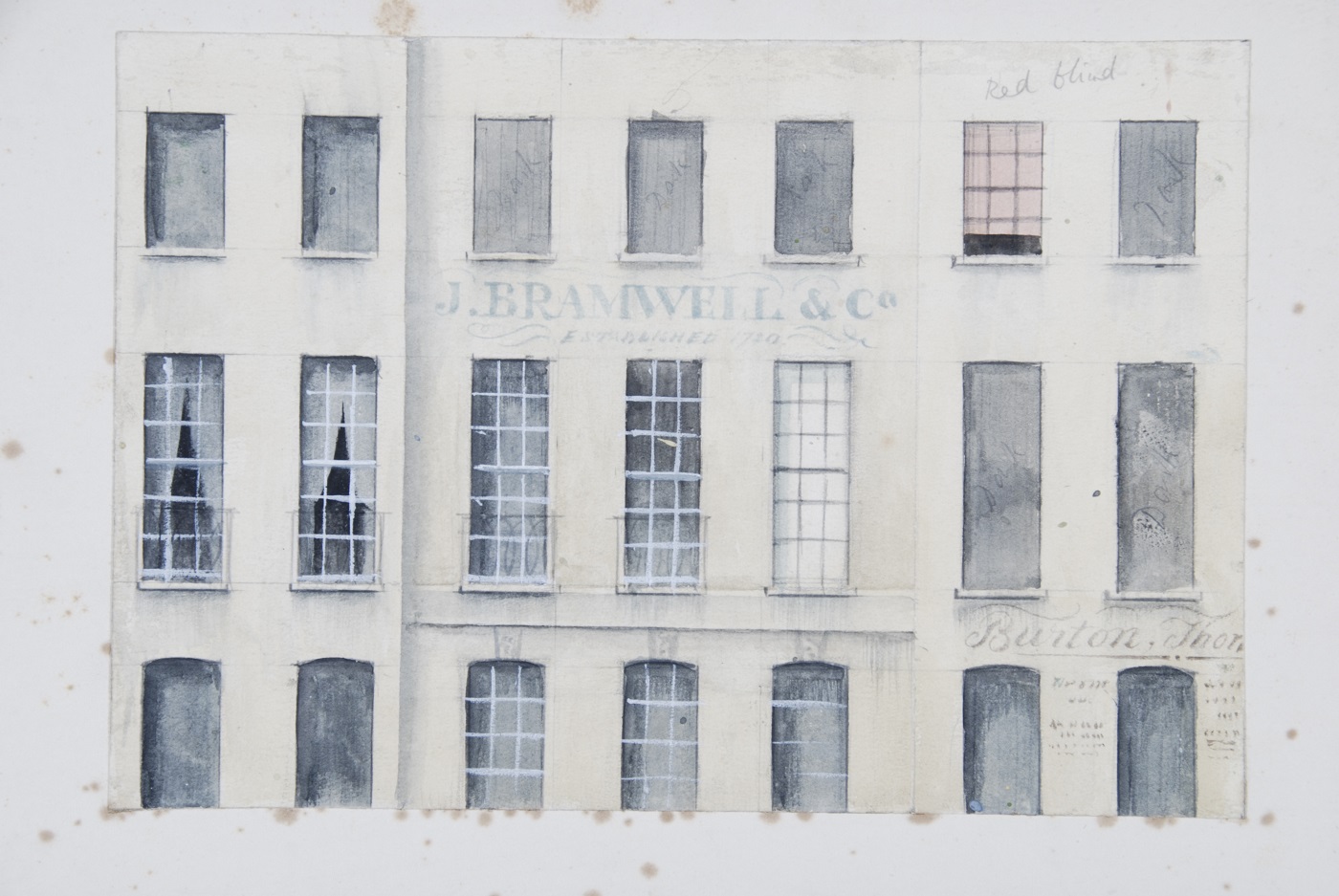
Design for Act II Scene 2, Pride and Prejudice. The Gardiners’ House in London. By Rex Whistler.
Reproduced by kind permission of the Salisbury Museum.
This design shows the building opposite the Gardiners’ house, which is just glimpsed through the drawing room windows, reminding us that the Gardiners live in Cheapside – a very inferior neighbourhood that Miss Bingley despises.
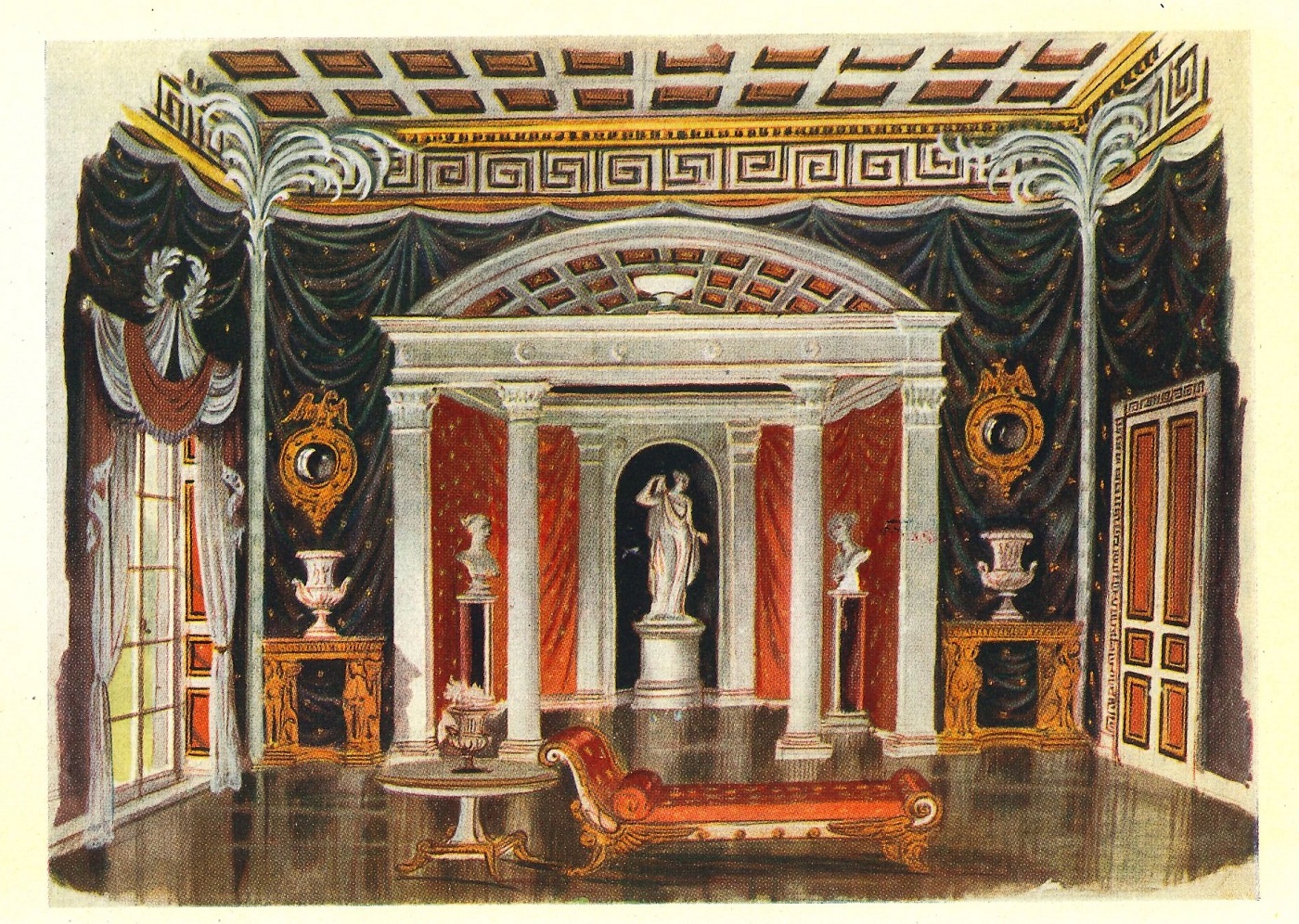
Set designs for Pride and Prejudice, Act II Scene 3: Rosing Park. By Rex Whistler, 1936.
In Jerome’s adaptation Lizzy goes to stay at Rosings Park rather than at Hunsford Parsonage, and it is here in the ostentatiously grand drawing room that Mr Darcy first proposes to her. Rex Whistler’s ornate design features classical columns and statuary, leaving no one in any doubt of Lady Catherine’s grandeur and magnificence.