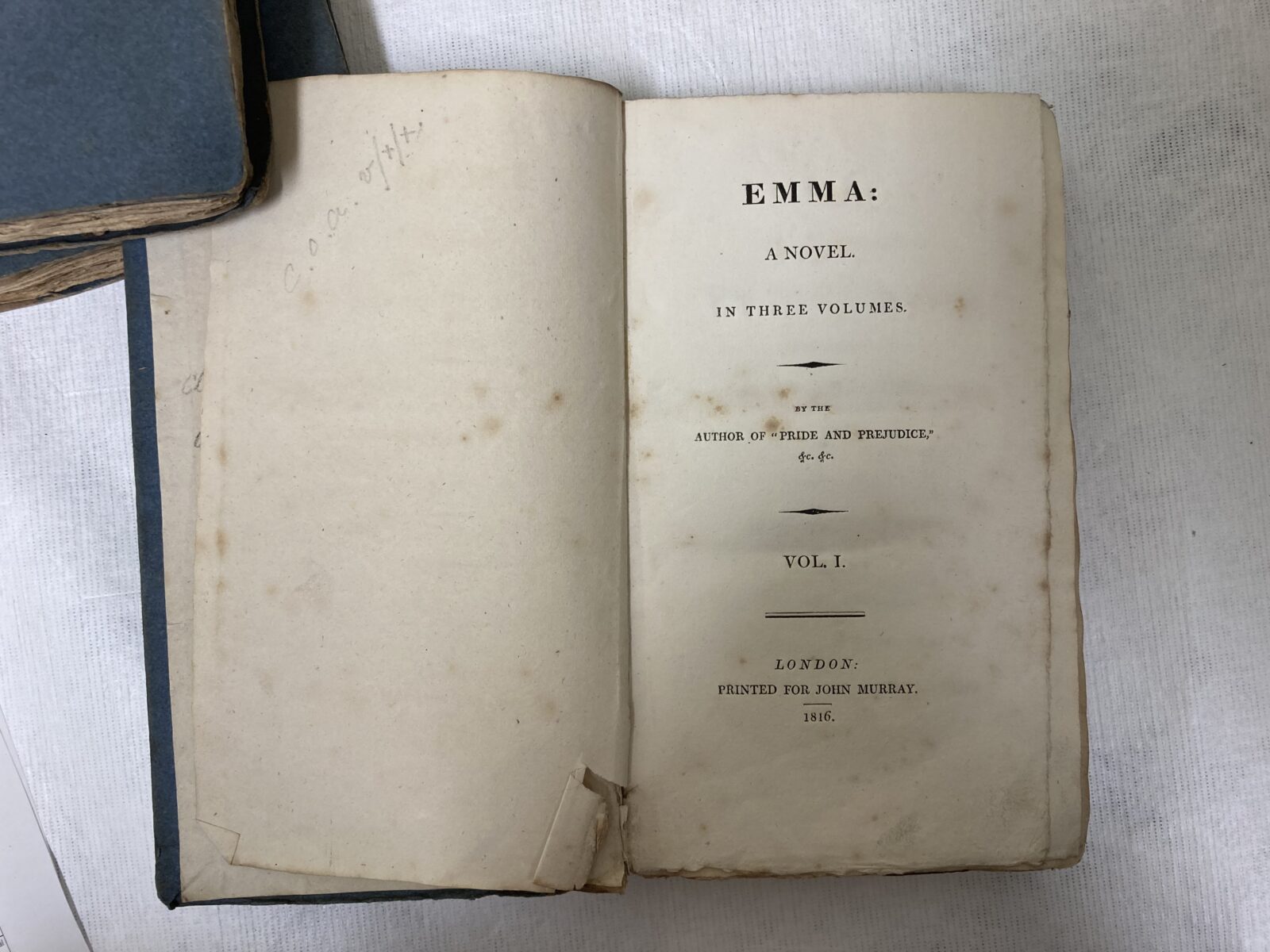
Emma
Emma was Jane Austen’s fourth published novel, and the last to be published during her lifetime. Set in the fictional village of Highbury, the story focuses on its ‘handsome, clever and rich’ heroine Emma Woodhouse, who entertains herself by matchmaking and meddling in the lives of her friends and neighbours. Emma is the only one of Austen’s heroines who does not need to marry for money; however the themes of female dependence, marriage and class, and the lack of other possibilities available to women, are still prominent. The novel also looks at broader themes such as health, masculinity and good parenting, and it touches upon the “Irish question” which related to the status of Ireland as part of the United Kingdom, following the 1801 Act of Union.
Jane Austen drafted the novel in 1814, in Chawton, around the same time that Mansfield Park was published. Once completed, it was submitted to her new publisher John Murray who offered £450 for it. However, this large sum was also to include the copyrights of Mansfield Park and Sense & Sensibility. Jane refused, and arranged again to publish on commission, in a print run of 2,000 copies.
Emma appeared on the 23rd of December in 1815. The title page stated that the work was ‘By the Author of “Pride & Prejudice” &c. &c.’; it also included a dedication (by permission) to the Prince Regent. The public reaction was mixed, and the print run did not sell as well as expected; by February 1817 only around 1500 copies had sold and Jane had earned only £38.18, after the initial loss was deducted on the second edition of Mansfield Park.
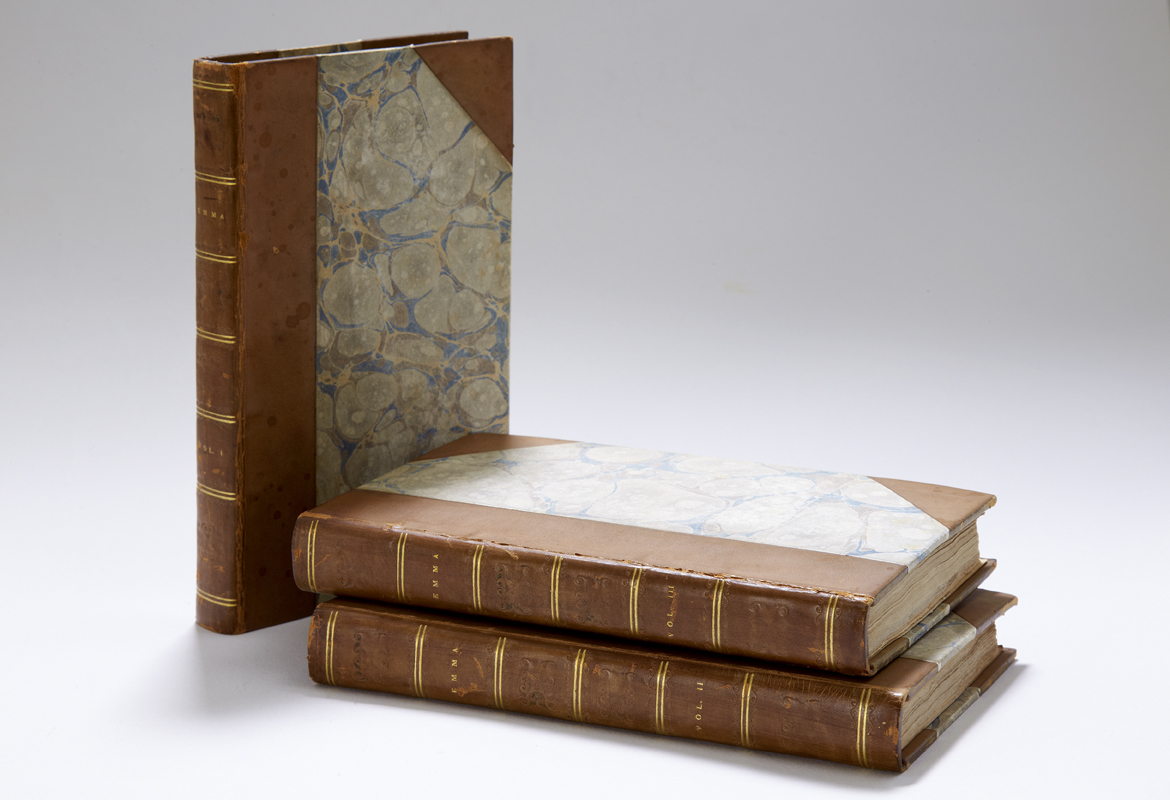
First edition of Emma in three volumes, from the Museum’s collection
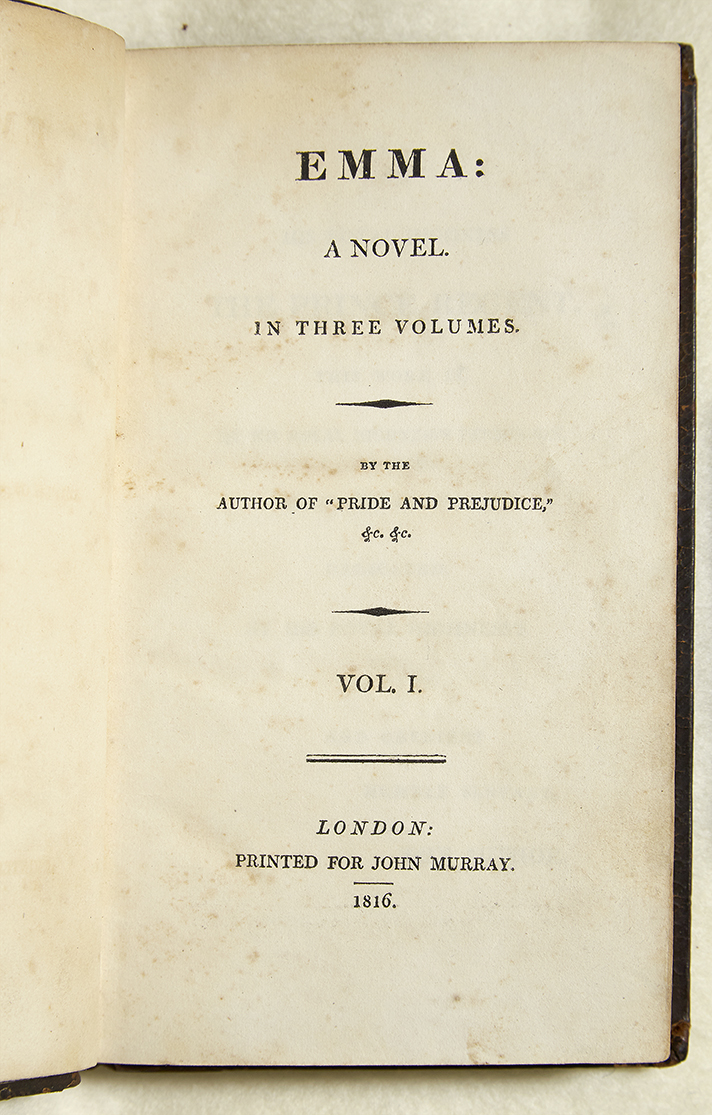
Title page of the first edition of Emma, from the Museum’s collection